Region
Capital Region
Greater Reykjavik Area with 60% of Iceland's population
Iceland's vibrant capital city—the world's northernmost capital of a sovereign nation, blending Viking heritage with modern Nordic culture.
Reykjavík is Iceland's walkable capital of about 140,000 people. Two full days covers the core — Hallgrímskirkja, the Harpa waterfront, a museum, a geothermal pool — and three to five days lets you day-trip to the Golden Circle, South Coast, or Reykjanes while sleeping in one place. The center is compact; no car is needed until you leave town.
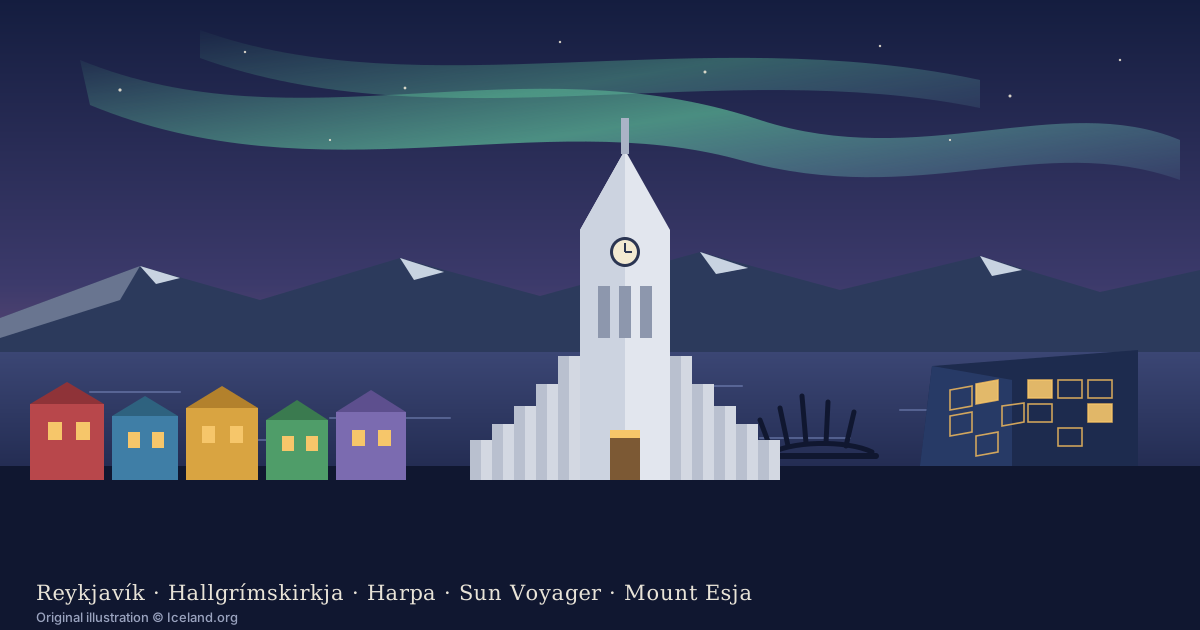
Reykjavík's skyline in miniature: Hallgrímskirkja, Harpa, the Sun Voyager, and Mount Esja. Original illustration by Iceland.org.
Reykjavik is the gateway to Iceland's adventures. Most tours depart from here, and it's the hub for domestic flights and buses.
Pages are reviewed for practical usefulness, source quality, and volatile claims before publication.
Greater Reykjavik Area with 60% of Iceland's population
Iceland's largest city and only major urban center
First permanent Norse settlement in Iceland
Iceland's tallest church at 74.5 m. The tower elevator offers a 360° panorama of the city, mountains, and ocean — arrive before 10 AM to avoid queues.
This geometric glass waterfront building, its facade developed with artist Ólafur Elíasson, hosts concerts, conferences, and free lobby exhibitions. Walk inside even without tickets.
Stainless steel sculpture by Jón Gunnar Árnason on the Sæbraut waterfront. Faces north across the bay toward Mount Esja — best photographed at sunset.
The glass dome on Öskjuhlíð hill pairs a 360° observation deck with nature exhibitions, including a man-made ice cave. A 30-minute walk or short bus ride from downtown.
Covers 1,200 years of Icelandic history from Viking settlement to modern independence. Budget 1.5–2 hours. Free admission for under-18s.
A Viking-age longhouse from around 871 AD, preserved in situ where it was excavated beneath Aðalstræti — the most tangible link to the city's founding.
Also worth your time: the Old Harbour piers for whale watching, the Whales of Iceland and Saga museums in Grandi, and the city's seven geothermal pools.
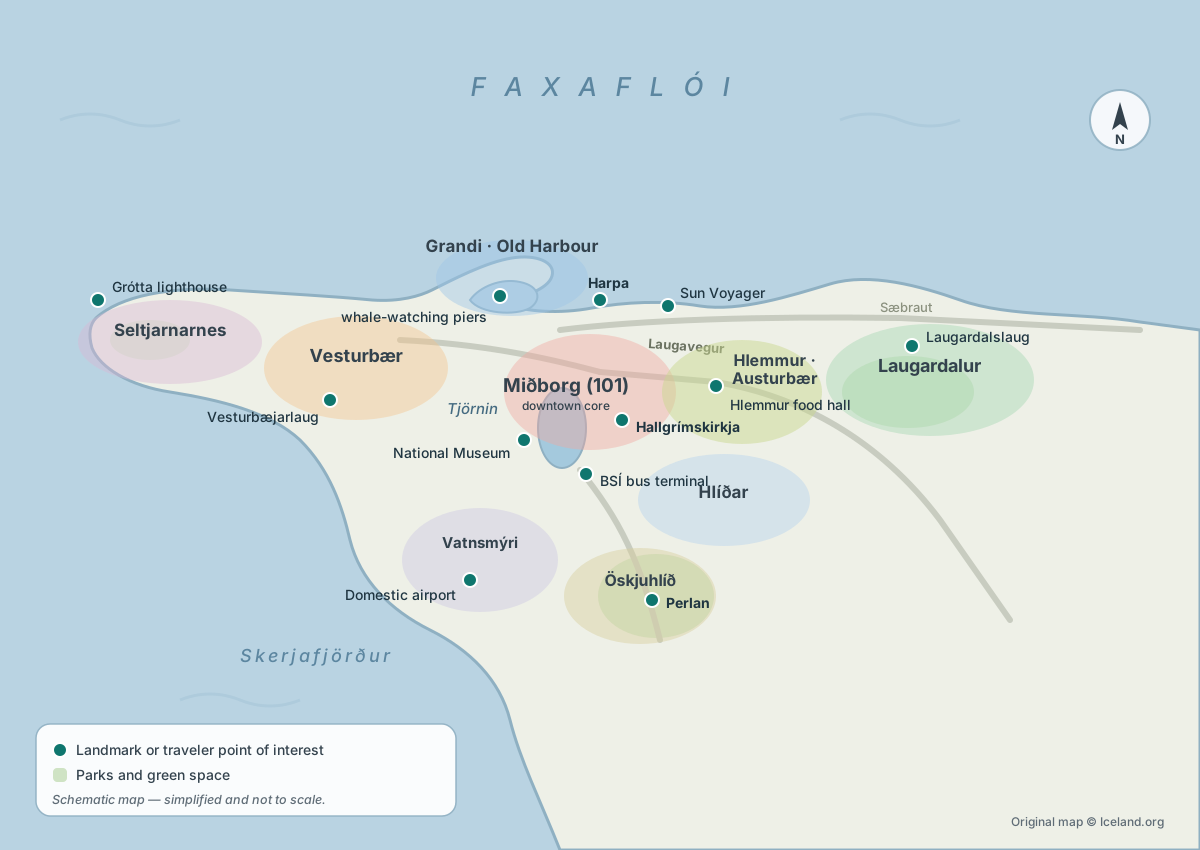
Reykjavík's central neighborhoods at a glance. Schematic map by Iceland.org — simplified and not to scale.
The historic center around Laugavegur and Austurstræti. This is where you'll find most restaurants, bars, and shops, plus Hallgrímskirkja on its hill and the Tjörnin pond ringed by city hall and museums. Street art covers many buildings, and the area is fully walkable in 20 minutes end to end. Base yourself here for a first visit.
A former fish-processing district turned creative quarter on the western waterfront. Home to the Marshall House contemporary art center, the Grandi Mathöll food hall, the Whales of Iceland and Saga museums, and the piers where whale-watching and puffin boats depart. Ten minutes on foot from the center.
A quiet residential neighborhood west of downtown with colorful tin-clad houses, the University of Iceland campus, and the Vesturbæjarlaug public pool — one of the best neighborhood pools for mixing with locals. Keep walking west and you reach Seltjarnarnes and the Grótta lighthouse at the tip of the peninsula.
The east end of Laugavegur around the old bus terminal, now anchored by the Hlemmur Mathöll food hall and a growing number of guesthouses and hostels. More budget-friendly than the 101 core while staying within walking distance of everything downtown.
The 'hot spring valley' that gave Reykjavík its name lies 3 km east of the center: a green belt with Laugardalslaug, the city's largest geothermal pool, plus the botanical garden and the family park and zoo. A flat, easy cycle or a short ride on a city bus from Hlemmur.
South of the center, the forested Öskjuhlíð hill is crowned by Perlan and its glass dome, with walking trails winding down toward the coast. Below it, the Vatnsmýri wetland holds the domestic airport and the university's Nordic House. Good for a half-day green escape without leaving town.
Reykjavík rewards a slow first day on foot, then works brilliantly as a base camp. Here is how we would divide your time, whichever season you come.
Start at Hallgrímskirkja when the tower opens and ride up for the panorama before the queues. Walk down the rainbow-painted upper stretch of Skólavörðustígur, browse Laugavegur, and grab lunch at Hlemmur Mathöll. In the afternoon follow Sæbraut along the water past the Sun Voyager to Harpa — the honeycomb lobby is free to wander. Fit in the Settlement Exhibition (a Viking-age longhouse preserved where it was excavated), then finish like a local: an evening soak at Sundhöllin and dinner downtown.
Day two belongs to the waterfront: a morning whale-watching sailing from the Old Harbour, then the Grandi quarter — Whales of Iceland, the Marshall House galleries, and lunch at Grandi Mathöll. Add the National Museum or Perlan in the afternoon and a soak at Sky Lagoon toward sunset. Day three is the classic Golden Circle loop (Þingvellir, Geysir, Gullfoss), or pair the Blue Lagoon with your arrival or departure day since it sits near the airport.
With four or five days you can day-trip far while sleeping in the same bed. Give one full day to the South Coast waterfalls and black-sand beaches, another to Snæfellsnes or the Reykjanes Peninsula's lava fields and geothermal vents. In between, slow down: hike the marked trail up Mount Esja, the 914 m ridge across the bay, or take the short ferry to Viðey island. From September to April, keep an evening free for a northern-lights hunt away from the city glow.
From Keflavík Airport: Iceland's international airport is 50 km (about 45 minutes) southwest of Reykjavík. Airport coaches (Flybus, Airport Direct) meet arriving flights and run to the BSÍ terminal on the edge of downtown, with hotel drop-off options. Taxis are metered but expensive; renting a car at the airport makes sense if day trips are on your list — see our car rental guide.
City buses: Strætó's yellow buses cover the whole capital area; buy fares in the Klapp ticketing app or with a Klapp card (straeto.is has current fares and route maps). The Reykjavík City Card bundles Strætó travel with the city-run pools, several museums, and the Viðey ferry — check current inclusions on visitreykjavik.is before buying.
On foot and by wheel: The center is walkable end to end in about 30 minutes, and a coastal cycle path rings the peninsula. Shared e-scooters and bikes (local operator Hopp) work well in the snow-free months. Ride-hailing apps like Uber do not operate in Iceland; licensed taxis (Hreyfill, BSR) can be ordered by app or phone.
Leaving the city: A rental car is the most flexible way to reach the Golden Circle, South Coast, and beyond — see our driving guides and the Ring Road overview. Coach day tours cover the same routes if you'd rather not drive, and the domestic airport in Vatnsmýri connects Reykjavík with Akureyri, Egilsstaðir, Ísafjörður, and the Westman Islands.
Central Reykjavík is mostly flat along the harbour and Kvosin quarter, but the blocks up to Hallgrímskirkja climb a real hill — Skólavörðustígur gains height steadily, so plan the downhill direction if steps and slopes are hard work. Hallgrímskirkja's tower viewpoint is reached by elevator (a short flight of stairs remains at the very top), and Harpa, Perlan, and the major museums have step-free entrances and lifts.
Strætó operates low-floor city buses with wheelchair ramps on most routes — check straeto.is for accessible-service details. The geothermal pools are a highlight for travelers with limited mobility: Laugardalslaug and several other city pools have step-free access and pool hoists, and warm water makes them genuinely restorative. Confirm current equipment with the individual pool on reykjavik.is before visiting.
Two seasonal notes: many central sidewalks are heated with geothermal runoff and stay clear in winter, but side streets ice over — bring shoe spikes from October to April. And older buildings downtown, including some bars and guesthouses, still have narrow doors and steps; when a venue matters to your plans, ask before you book. Visit Reykjavík (visitreykjavik.is) maintains accessibility information for attractions, and SafeTravel (safetravel.is) covers conditions outside the city.
Summer (June–August): Around 21 hours of daylight at the solstice, outdoor festivals, street life until midnight, and the warmest weather (10–15°C). Peak season for whale watching from the Old Harbour — and for prices and crowds. Book rooms early.
Autumn (September–October): The northern-lights season opens while days are still workable. Smaller crowds, autumn color in Laugardalur and on Öskjuhlíð, and the city's film festival. A good-value window.
Winter (November–February): Daylight shrinks to about 4 hours around the December solstice, but the low Arctic light is beautiful, Christmas markets fill the squares, and dark skies mean aurora hunting starts 20 minutes from your hotel — see our northern lights guide. Museums, pools, and cafés carry the short days.
Spring (March–May): Fast-lengthening days, migrating birds returning to Tjörnin and Grótta, lower prices, and a last chance at the aurora in March. Weather is changeable — pack for all of it. For a country-wide view, see when to visit Iceland.
Þingvellir, Geysir, and Gullfoss — Iceland's most popular day trip. 230 km loop, 6–8 hours.
Geothermal spa 50 km from Reykjavík. Combine with airport pickup/dropoff. Pre-booking essential.
Seljalandsfoss, Skógafoss, Reynisfjara black sand beach, and Vík. 340 km round trip.
Kirkjufell mountain, Arnarstapi cliffs, and Snæfellsjökull glacier. Full day, 350 km round trip.
Lava fields, the Bridge Between Continents, and steaming vents at Gunnuhver — a half-day loop that pairs well with arrival or departure.
Boats sail from the Old Harbour year-round, with peak sightings in summer. Half a day including check-in.
Reykjavík's restaurant scene is surprisingly diverse for a city its size. Expect to pay 3,000–6,000 ISK ($22–44 USD) for a main course at mid-range restaurants and 7,000–12,000 ISK ($51–88 USD) at upscale spots. Budget-friendly options include the Grandi Mathöll and Hlemmur Mathöll food halls, Bæjarins Beztu hot dog stand (a local institution since 1937), and bakeries like Sandholt on Laugavegur.
Traditional Icelandic dishes to try include plokkfiskur (mashed fish stew), lamb soup, and harðfiskur (dried fish with butter). Seafood is fresh and excellent — langoustine and Arctic char are local highlights. For the full national-cuisine picture, see our Icelandic food guide.
Small things our contributors keep going back for — the kind of recommendations we'd give a friend with one free evening in the city.
The hot pots at Sundhöllin or Vesturbæjarlaug at 7 AM are where Reykjavík actually talks politics and weather. Sundhöllin, the 1937 indoor hall, was designed by Guðjón Samúelsson — the same state architect behind Hallgrímskirkja.
The stretch from Harpa past the Sun Voyager is the city's best free view: low light on Mount Esja across the bay and the sculpture's steel catching the last sun. In winter the same walk doubles as a first aurora check before you commit to driving out of town.
The indoor flea market by the harbour (weekends only) is the spot for a secondhand lopapeysa wool sweater at half the boutique price — and the food stalls will let you try fermented shark without ordering a whole portion.
The lighthouse islet at the tip of Seltjarnarnes is a 40-minute walk or short cycle from Vesturbær. Check the tide tables — the causeway floods at high water — and note the islet itself closes during spring bird nesting. On dark clear nights this is the closest decent aurora spot to downtown.
Order 'eina með öllu' at Bæjarins Beztu, the harbourside hot-dog stand serving since 1937: crispy and raw onion, ketchup, sweet mustard, and remoulade. Icelandic hot dogs are lamb-based, and at around 700 ISK this is the city's most honest cheap meal.
You don't need a concert ticket. Step inside as the lights come on and watch the geometric glass facade — developed with artist Ólafur Elíasson — shift color against the harbour. Free, warm, and usually quiet on weeknights.
This city guide is researched, written, and mapped by the Iceland.org Travel Team — an independent editorial group publishing about Iceland since 2004. We are not a tour operator or tourism board. The neighborhood map and skyline illustration on this page are our own original work, and practical details are checked against the official sources linked above (Visit Reykjavík, Strætó, the Icelandic Met Office, and SafeTravel) on every review pass.
Planning help
Quick answers with safety notes where it matters.